Ancient Near Eastern Bronze Wild Boar Idol (Circa 1st Millennium BC) Figuirine For Sale

When you click on links to various merchants on this site and make a purchase, this can result in this site earning a commission. Affiliate programs and affiliations include, but are not limited to, the eBay Partner Network.

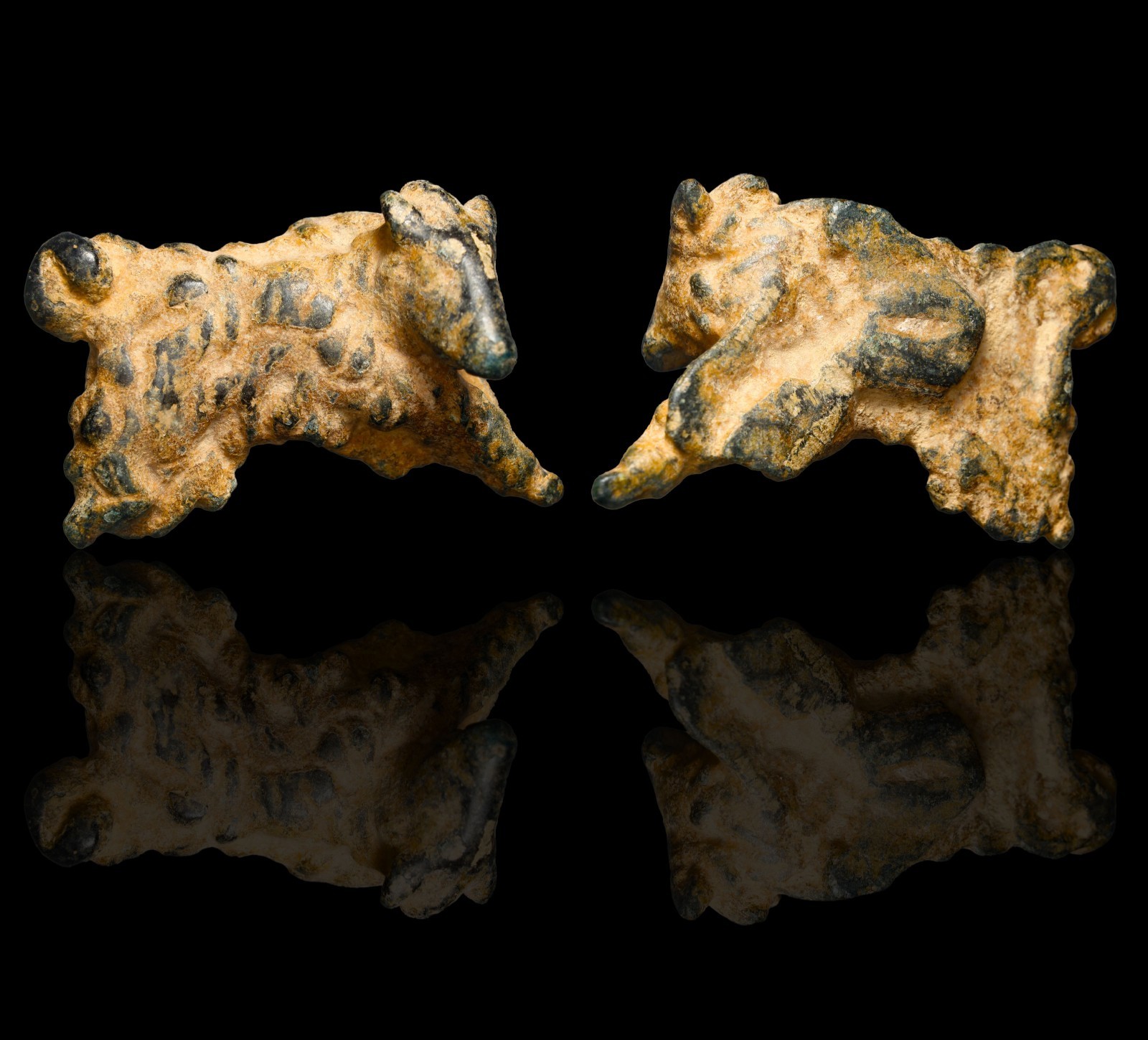
Ancient Near Eastern Bronze Wild Boar Idol (Circa 1st Millennium BC) Figuirine:
$378.14
Ancient Near Eastern Bronze Zoomorphic Wild Boar Idol (Circa 1st Millennium BC) 33mm Authentic Authenticity NoticeThis artifact is certified authentic and will be accompanied by a Certificate of Authenticity and Provenance. Details Object: Zoomorphic Votive Idol / Figurine Culture: Near Eastern (Luristan / North Persian) Date: Circa 1000–600 BC Material: Bronze (Copper-alloy) Form: Compact, muscular representation of a wild boar in a charging or standing posture Size: 33mm Region: Western Asia / Fertile Crescent
Identification: The Wild Boar in the Ancient Near EastThis 33mm bronze figurine is a powerful representation of a Wild Boar, a frequent subject in the "Animal Style" art of the early 1st millennium BC Near East. The Iconography: The idol captures the raw power of the boar, featuring a thick neck, a robust, muscular body, and a distinctive snout. While later cultures in the region developed religious dietary aversions to the pig, the wild boar remained a respected and feared symbol of ferocity and strength throughout the Bronze and Iron Ages. Symbolism: In the pre-Islamic and pre-Judaic Near East, the boar was often associated with the hunt and protective deities. Its image was used on talismans and votive offerings to grant the owner the boar's tenacity and defensive capabilities. Artistic Style: The stylized, somewhat abstract anatomy is diagnostic of the nomadic and semi-nomadic metalworkers of the Zagros Mountains, where animal-themed bronzes reached their artistic zenith.
Overview and Historical ContextDuring the early 1st millennium BC, the Near East was home to skilled metalworking cultures that produced a vast array of zoomorphic idols. This 33mm piece would have served as a votive offering, potentially placed in a sanctuary or carried as a personal protective totem. The boar’s aggressive nature made it an ideal emblem for warriors or hunters seeking divine favor. Far from being "hated" in this era, the wild boar was a sacred and central figure in the wild fauna of the Fertile Crescent. Authenticity Check Patina: The artifact displays a superb, stable "Desert" patina characterized by a dark chocolate-brown core and heavy, authentic earthen mineralization in sandy-ochre tones. Casting: The figure exhibits the characteristic "soft" contours of ancient lost-wax casting, with no evidence of modern mold seams or mechanical finishing.
Comparable Examples The British Museum, London: Accession No. 132912 (Bronze boar figurines from the Near East/Luristan). The Metropolitan Museum of Art, New York: Accession No. 63.22 (Ancient Near Eastern zoomorphic bronzes). Louvre Museum, Paris: Extensive collection of Persian and Mesopotamian animal-style votive bronzes.
Further Reading Moorey, P.R.S. – Catalogue of the Ancient Persian Bronzes: The definitive guide to zoomorphic metalwork from the region. Bahrani, Zainab – Rituals of War: On the symbolic role of aggressive animals in ancient Near Eastern art and society.
7-9
|
|
Other Related Items:
Related Items:
3 Ancient Near Eastern Agate Stone Intaglio Seal Lot $14.99
Ancient Near Eastern Glass Eye Beads Strand Antique Terra Cotta Spindle Whorl $197.00
Ancient Near Eastern Silver Zoomorphic Votive Figure Ram or Goat Authentic $284.75
|

 ABOUT
ABOUT