When you click on links to various merchants on this site and make a purchase, this can result in this site earning a commission. Affiliate programs and affiliations include, but are not limited to, the eBay Partner Network.
tem: Original 4‑page handwritten colonial letterDate: March 7, 1727/8 (Old Style / New Style)From: William Ball, New YorkTo: Ms. Mary White, Newport, Rhode IslandFormat: 3 manuscript pages + original address panelInk: Brown iron‑gallPaper: Laid paper, early 18th centuryContent: Religious devotion, spiritual courtship, Puritan theologyProvenance: Found among a hoard of early Virginia documents
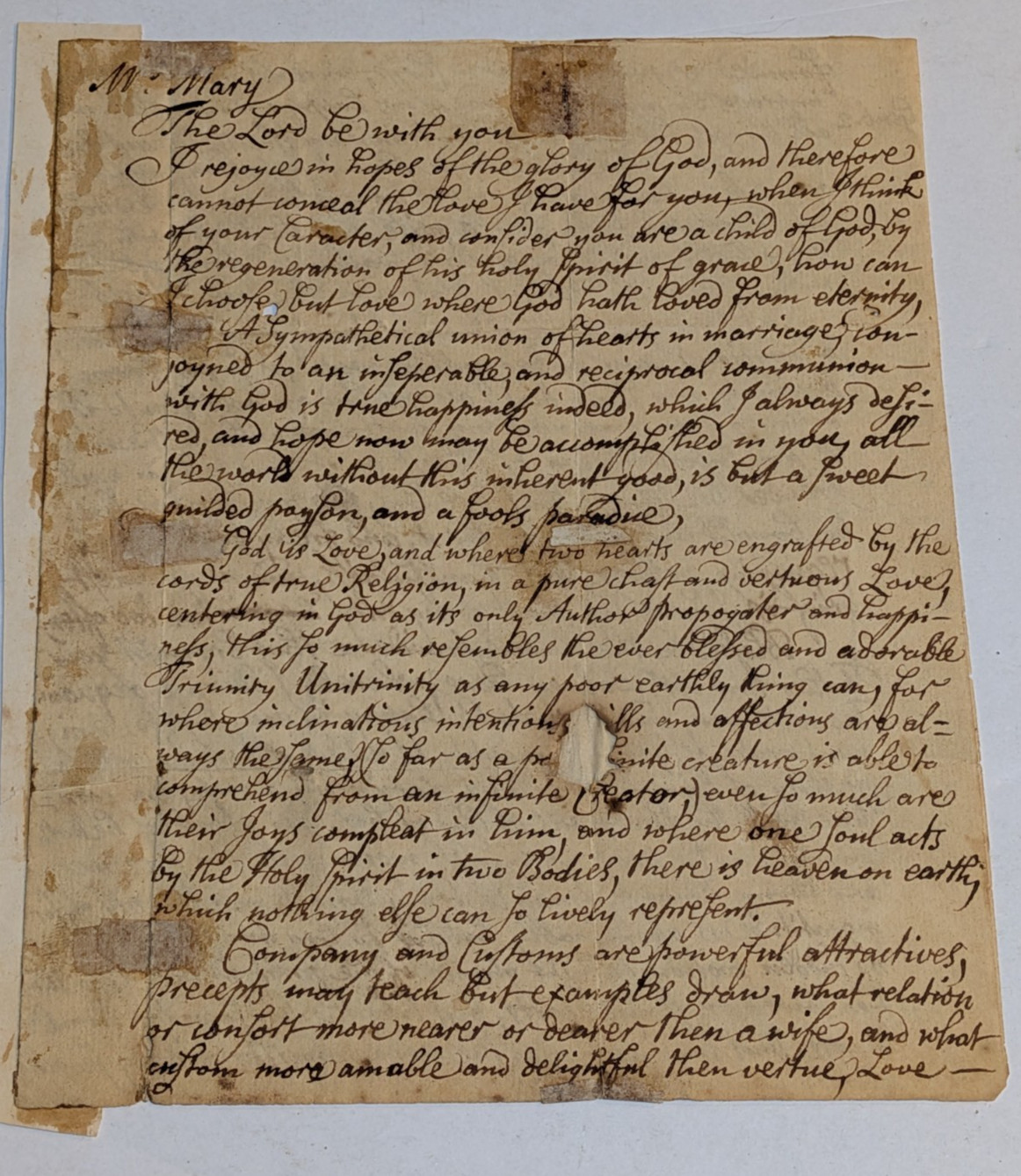
This is an extraordinary four‑page colonial religious love letter written by William Ball in New York and addressed to Ms. Mary White in Newport, Rhode Island. The letter is dated March 7, 1727/8, using the Old Style calendar then in use in the colonies. It is a deeply emotional, spiritual, and theological epistle—far more elaborate than typical colonial correspondence.
The content reflects Puritan devotional language, early revivalist sentiment, and the spiritualized courtship style found in pre–Great Awakening New England. Ball writes with intense religious affection, describing divine love, regeneration, sanctification, and the union of two souls under God. This is not business or legal writing—this is a rare surviving example of personal religious courtship in early America.
Below are substantial excerpts from the manuscript (spelling and capitalization preserved):
“I rejoice in hopes of the glory of God, and therefore cannot conceal the love I have for you… when I think of your character, and infer you were a child of God by regeneration of his holy spirit of grace… A sympathetic union of hearts in marriage, conjoyned to an inseparable and reciprocal communion with God is true happiness indeed.”
“Where love was engrafted by the roots of true Religion… one soul acts by the Holy Spirit in two bodies… there is heaven on earth which nothing else can so lively represent.”
“Bless’d be the divine providence that brought Father and Mr. Dabney, thereby I became acquainted with you and to be happy in you by the abundant grace of God.”
“May we walk sweetly together in our pilgrimage to the celestial city… may the Sun of righteousness rise with healing in his wings… may God in Christ be all in all to us.”
The letter closes with a full signature:
“New York the 7th 1727/8 — William Ball”
The original address panel is present:
“To Ms. Mary White in Newport — New York March 7th 1727/8.”
This manuscript is historically significant for its length, surviving address leaf, and rare content. Personal religious love letters from the 1720s almost never survive, especially ones crossing New York to Rhode Island. The language is rich, emotional, and theologically complex—ideal for collectors of early American manuscripts, Puritan studies, colonial religion, or New England family history. The only record I could find in colonial American of a William Ball marrying a Mary White happened in 1728 in Culpepper Virginia.
The letter contains a remarkable reference to “Mr. Dabney,” a name associated with the prominent Virginia Dabney family. During the 1720s, the Dabneys were active in New Kent and Hanover Counties, known for their literacy, religious devotion, and connections to Religious communities across the colonies.
The letter states:
“Bless’d be the divine providence that brought Father and Mr. Dabney, thereby I became acquainted with you…”
This line reveals that Mary White’s father and Mr. Dabney met prior to the writing of the letter, and that Dabney personally facilitated the introduction between William Ball and Mary White.
The most likely individual is Col. William Dabney (1707–1773), who would have been twenty years old in 1727/8—an age consistent with travel, religious study, or acting as a messenger or intermediary. His family’s Huguenot background and strong Protestant identity align perfectly with the intense devotional tone of the letter.
Alternatively, George Dabney (1669–1734), a respected elder in New Kent County, may have been involved as a senior religious figure or mentor.
Condition
Aged colonial laid paper with expected toning, edge wear, small holes, and old repairs. Ink remains legible throughout. Four full pages plus address panel.


 ABOUT
ABOUT